
الوحدة الثامنة - الصفحة 102 | المعاكسات

|
| Opposites in English — الكلمات المتضادة |
📚 Opposites — الكلمات المتضادة
تعلم الكلمات الإنجليزية وعكسها بطريقة ممتعة!
📘 شرح الدرس: الكلمات المتضادة
🃏 بطاقات تفاعلية (اضغط للقلب)
🎯 لعبة المطابقة (اختر الكلمة وعكسها)
الكلمة
العكس
✏️ أكمل الجمل
- big
- stand up
- long
- fast
Learning English vocabulary goes beyond simply memorizing words. To truly master the language, ESL students must understand how words relate to one another. One of the most effective ways to boost your vocabulary and express yourself clearly is by mastering opposites in English.
In this comprehensive guide, we will explore what opposites are, the different types of antonyms, how to form them, and common mistakes to avoid. Whether you are a beginner or a teacher looking for ESL teaching strategies, this guide has everything you need.
1. What Are Opposites (Antonyms)?
Opposites, formally known in linguistics as antonyms, are words that have contrasting or completely different meanings. Learning antonyms is a powerful tool because when you learn one word, you can easily learn its pair, effectively doubling your vocabulary.
Basic Examples:
- Big (large in size) – Small (little in size)
- Hot (high temperature) – Cold (low temperature)
- Happy (feeling joy) – Sad (feeling sorrow)
2. Types of Opposites in English
Did you know that not all opposites work the same way? In the English language, opposites can be divided into three main categories. Understanding these will help you improve your grammar significantly.
A. Gradable Opposites
These are opposite words on a scale. There can be middle points between them.
- Hot – Cold (You can have "warm" or "cool" in between).
- Young – Old (You can be "middle-aged").
B. Complementary Opposites
These represent an absolute or "either/or" situation. If it is one, it cannot be the other.
- Dead – Alive
- True – False
- Pass – Fail
C. Relational Opposites
These opposites exist only because of their relationship to each other.
- Buy – Sell (You cannot buy something unless someone sells it).
- Teacher – Student
- Husband – Wife
3. Forming Opposites with Prefixes
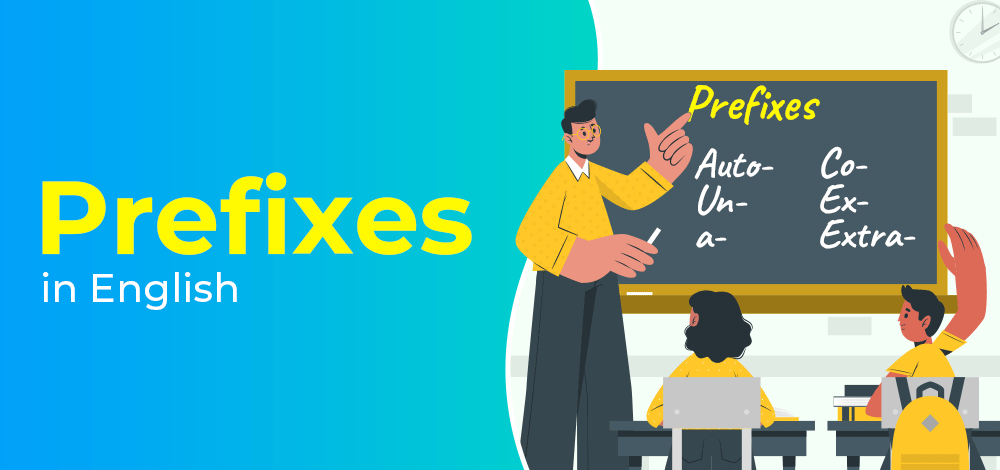
Sometimes, you don't need to learn a completely new word. You can create an opposite simply by adding a prefix at the beginning of a word. Here are the most common negative prefixes:
- Un-: Happy → Unhappy | Kind → Unkind
- Dis-: Agree → Disagree | Appear → Disappear
- In-: Visible → Invisible | Correct → Incorrect
- Im-: Polite → Impolite | Possible → Impossible
4. Comprehensive List of Common Opposites
Here is a categorized list of essential opposite words that every English learner should know:
Size and Measurements
- Big – Small
- Long – Short
- Tall – Short
- Wide – Narrow
- Heavy – Light
Time and Speed
- Early – Late
- Day – Night
- Fast – Slow
- Past – Future
Feelings and Conditions
- Happy – Sad
- Angry – Calm
- Rich – Poor
- Healthy – Sick
Action Verbs
- Open – Close
- Come – Go
- Push – Pull
- Start – Finish / Stop
5. Using Opposites in Sentences
Opposites are frequently used in English to draw comparisons and make descriptions more vivid:
- "This box is incredibly heavy, but that one is very light."
- "We started the journey early in the morning and arrived late at night."
- "Please push the door to enter, and pull it to exit."
6. Common Mistakes ESL Students Make
- Overusing "Not": Instead of "He is not tall", say "He is short".
- Confusing Contexts: The opposite of "right" can be "wrong" (True/False) OR "left" (Direction).
- Wrong prefix: A common mistake is saying "unpolite" instead of "impolite".
7. Teaching Tips for ESL Educators
- Use TPR (Total Physical Response): Have students physically act out opposites (stand up/sit down).
- Flashcards and Real Objects: Bring real items into class (a full glass vs. an empty glass).
- Matching Games: Create card games where students find the matching antonym pair quickly.
8. Practice Quiz: Test Your Knowledge!
Ready to test what you've learned? Match the words with their correct opposites.
- Fast → ______
- New → ______
- Full → ______
- Clean → ______
- Polite → ______
1. Slow | 2. Old | 3. Empty | 4. Dirty | 5. Impolite
Conclusion
Mastering opposites in English is a stepping stone to speaking naturally and writing expressively. By understanding the different types of antonyms and practising them in daily sentences, ESL students can significantly upgrade their language skills. Keep practising, make flashcards, and try to learn words in pairs!